

5 Electrical Issues Every South Florida Homeowner Should Watch For
Summer in South Florida means one thing for your electrical system: maximum stress. Every AC unit, ceiling fan, pool pump, dehumidifier, and appliance in your home runs harder and longer between May and October than anywhere else in the country. Your electrical panel, wiring, and circuits are handling peak demand for six straight months.
That’s why Spring and pre-Summer are time to pay attention to the warning signs of electrical issues. A minor electrical issue in May becomes a blown circuit, a fried appliance, or (in the worst case) an electrical fire in July. Here are five red flags that South Florida homeowners in Palm Beach, Broward, and Miami-Dade County should address before the heat really hits.
1. Your Circuit Breaker Trips Repeatedly
A breaker tripping once in a while is normal. But if the same breaker trips repeatedly, especially when your AC kicks on or when you’re running multiple appliances, that’s a warning sign. It usually means one of three things:
- The circuit is overloaded. Too many appliances drawing power from the same circuit. This is extremely common in older South Florida homes that were wired for 1970s electrical loads, not today’s smart homes with multiple AC zones, EV chargers, and kitchen appliances.
- The breaker itself is failing. Breakers wear out over time. After 20–30 years, they can lose the ability to handle their rated load. A failing breaker might trip at 12 amps when it’s rated for 20.
- There’s a short circuit or ground fault. This is more serious. Damaged wiring, a failing appliance motor, or moisture intrusion (common in South Florida’s humidity) can cause short circuits that repeatedly trip the breaker.
Why it matters before summer: When temperatures hit 95° in Fort Lauderdale or Miami and your AC is running at full capacity, a breaker that’s been intermittently tripping all spring will start tripping constantly, leaving you without cooling when you need it most.
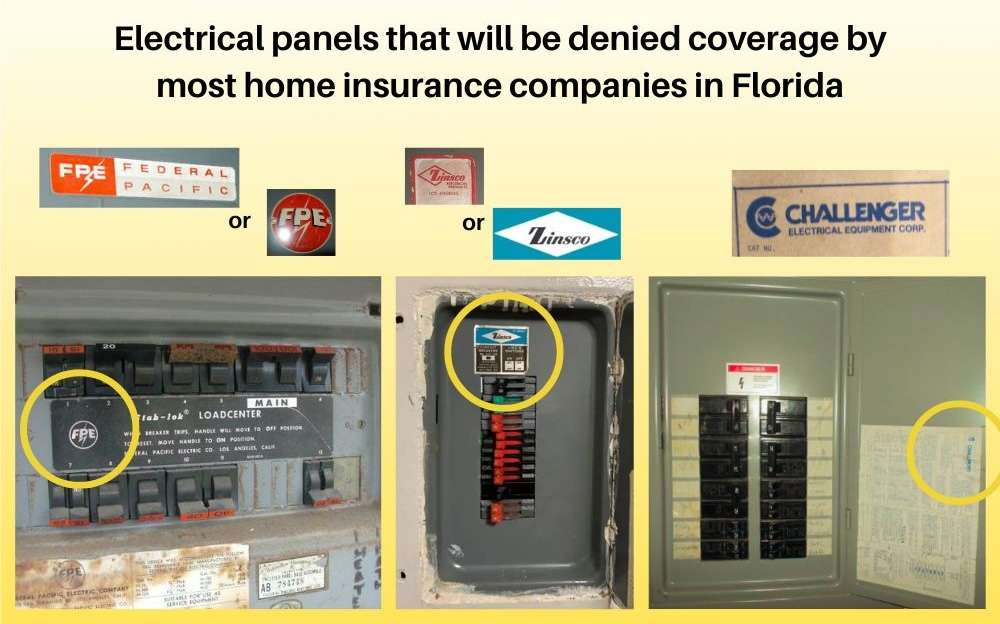
2. You Have a Federal Pacific, Zinsco, or Challenger Electrical Panel
If your South Florida home was built between 1960 and 1990, check your electrical panel right now. This is one of the lesser known electrical issues, but one of the most problematic. Open the panel door (the gray metal box, usually in your garage) and look for the manufacturer name on the inside label.
If you see Federal Pacific (FPE/Stab-Lok), Zinsco, or Challenger, you have a panel with documented safety defects:
- Federal Pacific Stab-Lok panels have a well-documented failure rate. Studies have found that roughly one in four of these panels is defective. The breakers fail to trip under overload conditions, allowing wires to overheat. These panels are linked to an estimated 2,800 house fires per year nationally.
- Zinsco panels (common in 1970s Florida homes) have design flaws where breakers can melt to the bus bar, continuing to conduct electricity even when they appear to be switched off.
- Challenger panels (manufactured through the 1980s) have known breaker defects similar to Federal Pacific’s issues.
The insurance angle: Most Florida home insurance companies now require a 4-point inspection on older homes before issuing or renewing a policy. A Federal Pacific, Zinsco, or Challenger panel will almost certainly fail the electrical portion of that inspection. This means your insurer can deny or cancel your coverage. In today’s Florida insurance market, that’s not something any homeowner can afford.
If you have one of these panels, replacing it isn’t optional. A modern 200-amp panel replacement typically costs $2,500–$3,500 in South Florida, and it’s one of the best safety investments you can make. Learn more about our electrical panel replacement service.
3. Your Home Has Aluminum Wiring
Between roughly 1965 and 1973, aluminum wiring was widely used in Florida home construction as a cheaper alternative to copper. If your home in Hollywood, Pembroke Pines, Coral Springs, Plantation, Sunrise, or any development built during that era has its original wiring, there’s a good chance it’s aluminum.
The problem: aluminum expands and contracts more than copper when it heats up under electrical load. Over years of use, this causes connections at outlets, switches, and junction boxes to loosen. Loose connections create heat. Heat creates fire risk.
Aluminum wiring itself isn’t illegal in Florida, but it’s a known fire risk that requires specific maintenance and remediation. The two most common solutions are:
- COPALUM crimp connectors — special connectors that join aluminum wire to short copper “pigtails” at every outlet, switch, and connection point. This is the gold standard fix.
- AlumiConn connectors — an approved alternative that’s less expensive but still effective.
Why it matters before summer: Aluminum wiring connections are most likely to fail under high electrical loads, exactly the conditions created when your AC, pool pump, and appliances are all running during a South Florida summer. If your connections haven’t been inspected or remediated, spring is the time to address it.
4. Your Outlets or Switches Feel Warm to the Touch
Touch the cover plates on your light switches and outlets around the house (with the back of your hand first for safety). If any of them feel warm or hot — especially outlets that don’t have anything plugged in — that’s a red flag.
Warm outlets typically indicate:
- Loose wiring connections behind the outlet (especially dangerous in homes with aluminum wiring)
- An overloaded circuit drawing more current than the wiring can safely handle
- A failing outlet with worn internal contacts
- Improper wiring from a previous DIY job or unlicensed contractor
Other signs in the same family: outlets that spark when you plug something in, light switches that buzz or hum, discolored or melted outlet cover plates, or a burning plastic smell near any electrical fixture. Any of these warrant an immediate call to a licensed electrician. Don’t wait.
South Florida context: Homes in coastal areas like Deerfield Beach, Delray Beach, Pompano Beach, and Miami Beach deal with salt air corrosion on electrical components. These include outdoor outlets, panel connections, and exposed junction boxes. Corrosion increases resistance, which increases heat, which increases fire risk. If you live near the coast, an electrical inspection is even more important.
5. You Don’t Have GFCI or AFCI Protection Where It’s Required
GFCI (Ground Fault Circuit Interrupter) outlets are the ones with the “Test” and “Reset” buttons. You’ve probably seen them in bathrooms and kitchens. They detect ground faults (current flowing where it shouldn’t) and cut power instantly to prevent electrocution. In South Florida, where moisture is everywhere, GFCI protection is critical.
Florida’s building code currently requires GFCI protection in bathrooms, kitchens (within 6 feet of the sink), garages, outdoor areas, laundry rooms, basements, crawl spaces, and near pools or hot tubs. But many older homes in Broward, Palm Beach, and Miami-Dade were built before these requirements existed — and never upgraded.
AFCI (Arc Fault Circuit Interrupter) breakers are newer and protect against electrical arcs — tiny sparks caused by damaged or deteriorating wiring that can ignite surrounding materials. Current Florida code requires AFCI protection in bedrooms, living rooms, hallways, and most habitable spaces in new construction.
Why it matters before summer: Summer in South Florida brings afternoon thunderstorms almost daily. Power surges from lightning strikes and grid fluctuations are a constant threat from June through October. GFCI and AFCI protection are your frontline defense against electrical shock and arc-initiated fires, especially during storm season.
What Should You Do if You Spot Any of These Red Flags?
Don’t try to diagnose or fix electrical issues yourself. Electrical work in Florida requires a licensed electrician — it’s not just a recommendation, it’s code. Here’s what to do:
- Schedule an electrical safety inspection. A licensed electrician can evaluate your panel, wiring type, outlet conditions, and protection devices in about an hour.
- Prioritize panel replacement if you have a recalled brand (Federal Pacific, Zinsco, Challenger). This is a safety and insurance issue.
- Address aluminum wiring remediation before summer load peaks. COPALUM or AlumiConn pigtailing at all connection points is the standard fix.
- Upgrade GFCI/AFCI protection in areas where it’s missing. GFCI outlets are inexpensive ($15–25 each) and can prevent electrocution. AFCI breakers typically run $30–50 per circuit.
- Get your 4-point inspection done proactively if your home is 25+ years old. Identifying and fixing electrical issues before your insurance renewal avoids nasty surprises.
How Total Repair Pros Can Help
Electrical is one of Total Repair Pros’ four core trades — and we hold Florida license EC0001244. We handle everything from outlet replacements and panel upgrades to aluminum wiring remediation and GFCI installations across Palm Beach, Broward, and Miami-Dade County.
- $0 trip charge for warranty members: electrical inspections and repairs at no extra cost
- Licensed electricians on staff: no subcontractors, ever
- All four trades under one roof: if your electrical inspection reveals an AC issue or a plumbing concern, we handle it all in one visit
- 55+ years in South Florida: we know the wiring in these homes because we’ve been repairing them since they were built
Get ahead of summer. Request an electrical safety inspection online or call 954-900-6767.
Frequently Asked Questions
How do I know if my home has a recalled electrical panel?
Open your electrical panel (the gray metal box, usually in the garage) and look for the manufacturer name on the interior label. Federal Pacific (Stab-Lok), Zinsco, and Challenger are the most common recalled brands in South Florida homes built between 1960 and 1990. If you see any of these names, contact a licensed electrician for evaluation and replacement.
Is aluminum wiring dangerous in Florida?
Aluminum wiring is legal in Florida but carries an elevated fire risk due to the way aluminum expands and contracts under load, which loosens connections over time. Homes built between 1965 and 1973 most commonly have aluminum wiring. The fix is pigtailing with COPALUM or AlumiConn connectors at every outlet, switch, and junction point.
Will a bad electrical panel affect my Florida home insurance?
Yes. Most Florida insurers require a 4-point inspection on older homes, and a Federal Pacific, Zinsco, or Challenger panel will typically fail the electrical portion. This can result in your policy being denied, cancelled, or issued at a significantly higher premium. Replacing the panel resolves the issue.
What is a GFCI outlet and do I need one?
A GFCI outlet has “Test” and “Reset” buttons and detects ground faults — current flowing where it shouldn’t — cutting power instantly to prevent electrocution. Florida building code requires GFCI protection in bathrooms, kitchens, garages, outdoor areas, laundry rooms, and near pools. If your home was built before these codes existed, upgrading is strongly recommended.
How much does it cost to replace an electrical panel in South Florida?
A standard 200-amp panel replacement in South Florida typically costs $1,800 to $3,500, depending on the complexity of the installation, the condition of existing wiring, and whether any additional circuits need to be added. Total Repair Pros provides free estimates for panel replacements across Palm Beach, Broward, and Miami-Dade County.