

When Your Appliance Breaks, Should You Fix or Replace?
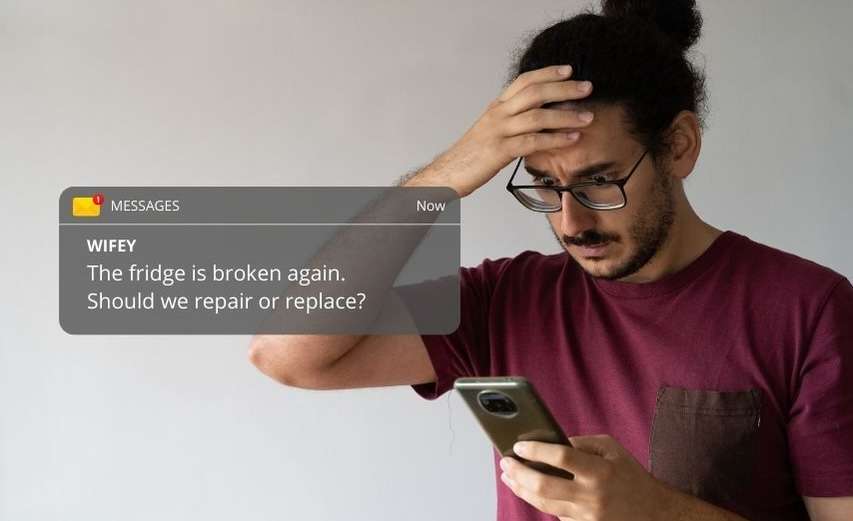
When a major appliance stops working, it’s disruptive. Whether it’s a refrigerator not cooling or a washing machine not draining, the decision comes quickly: do you fix it—or replace it?
There’s no one-size-fits-all answer. But there are clear guidelines that can help. At Total, we’ve helped homeowners across South Florida repair, replace, and protect their appliances for over 55 years. Based on that experience, here’s what to consider…
1. Is Your Appliance Still Under Warranty?
Start by checking for active coverage. If your appliance is still under its manufacturer’s warranty, repairs are usually covered in full or at minimal cost. Most warranties last one to two years, depending on the brand and product type.
If you purchased an extended warranty or a home service contract, repairs might still be fully covered—even years after purchase. If your appliance is still protected and the issue is repairable, it’s almost always worth fixing (even if it’s a bit of a wait from the manufacturer.)
2. How Old Is the Appliance?
Knowing the average life expectancy of your appliance is helpful when weighing your options. Here are standard lifespans:
- Refrigerator: 10–15 years
- Dishwasher: 8–12 years
- Washing machine: 10–12 years
- Dryer: 10–13 years
- Oven: 13–15 years
- Microwave: 7–10 years
- Garbage disposal: 8–12 years
If your appliance is under halfway through its lifespan, repairs usually make sense. But if it’s reaching or exceeding its expected lifespan, replacement may be smarter—especially if problems are becoming frequent.
Keep in mind: premium appliances may last longer due to stronger parts, better materials, and smarter usage design.
3. How Much Does the Repair Cost?
A common rule of thumb: If the repair will cost more than 50% of the price of a new appliance, replacement may be the better option.
For example: If your 10-year-old dishwasher needs a $400 repair and a new one costs $800, replacement makes more sense.
But if the repair is minor—like a new heating element or door seal—it’s usually worth fixing, even for an older unit.
Also consider hidden costs:
- Will new appliances require changes to cabinetry or plumbing?
- Are there delivery or installation fees?
- Is there a delay in getting the unit or parts?
4. What Features or Efficiency Are You Missing?
Some people replace functioning appliances to upgrade features or improve energy use. Modern appliances often offer:
- Smart controls and app integration
- Better energy efficiency
- Quieter performance
- Sleeker design
According to the U.S. Department of Energy, ENERGY STAR-certified washers and refrigerators can save $35–$50 annually on utility bills. For people replacing older, less efficient models, those savings add up over time.
If your current appliance lacks essential functions—or if the energy use is significantly higher—upgrading may be the better long-term option.
5. Is Your Appliance Part of a Service Plan?
If you have a Total home service contract, repairs are fully covered for most in-unit appliances. No deductibles, no co-pays, and no service call fees. Our plans cover:
- Refrigerators
- Ovens and ranges
- Dishwashers
- Washers and dryers
- Microwaves
- Garbage disposals
When a service call is free, there’s less pressure to rush into a replacement. We diagnose the issue and handle the repair using in-house technicians—no third-party contractors, no runaround.
Service contracts are ideal for high-end appliance owners who want to maximize product life and avoid surprise expenses.
Total is South Florida’s Trusted Source for Appliance Repairs Since 1970
Total has been a trusted repair provider in Miami-Dade, Broward, and South Palm Beach counties for over 55 years. Our trained technicians repair all major appliance brands and models, and we stock common parts to speed up service. We’re completely in-house; no subcontractors and no overseas call centers.
We also offer customizable home service contracts, designed to keep appliances running well beyond their average lifespan.
For condo residents, individual homeowners, and associations alike, Total helps reduce downtime, avoid unnecessary replacements, and protect your investment.
Don’t Guess—Call a Pro
When an appliance fails, it’s easy to panic and assume you’ll need a new one. But many common issues—like broken thermostats, clogged pumps, or worn gaskets—can be repaired quickly and affordably.
Before spending thousands on a new unit, call a professional (like us!) to assess the damage. And if you’re tired of guessing every time something breaks, ask us about year-round appliance coverage through a Total service contract.