

A Simple Guide to AC Refrigerants, from R-22 to R-454B
A Simple Guide to AC Refrigerants
What’s AC refrigerant?
Air conditioners need refrigerant, sometimes known as “freon,” which helps cool the air in your home. But not all refrigerants are the same. Over time, various blends of refrigerant have been phased out. Newer types are now required. Here is how it all happened, and what it means for you as a homeowner.
Why Refrigerants Changed
- Older Refrigerants (CFCs and HCFCs): These damage the ozone layer.
- Shifts in Regulations: International agreements like the Montreal Protocol set deadlines. The U.S. followed with strict phase-out rules.
- New Standards: The U.S. banned R-22 in new systems by 2010. R-410A then became the main choice, but next-generation options like R-32 or R-454B reduce climate impact.
R-22 Phase-Out
- What is R-22? It is an HCFC used in many older AC units.
- Why phase it out? R-22 still hurts the ozone layer.
- When did it end? New R-22 production stopped in 2020. New equipment stopped utilizing R22 around 2010.
- What if you still have an R-22 system? You can keep using it. But if you need more refrigerant or parts related to the refrigerant circuit(Compressors, coils, or metering devices), refrigerant is expensive or hard to find, and manufacturers have stopped making parts.
Manufacturing Shifts as a Result of R-22 Phase-Out
- Old units using R-22 discontinued: Companies stopped making AC systems that use R-22 around 2010.
- Parts supply issues: Some parts for R-22 systems are no longer produced. Over time, replacements become rare.
- Focus on R-410A: Most new systems (installed prior to January 2025) use this refrigerant, but its global warming potential is also high.
- Preparing for Next Step: Manufacturers are developing units that use refrigerants like R-32 or R-454B, which have a lower impact on climate.
R-410A’s Era
- R-410A as the next step after R-22: R-410A was introduced in mid-1990s, and has no ozone-depleting chlorine.
- Market Leader by 2010: After R-22 was banned in new units, R-410A became the standard refrigerant.
- Downside: R-410A has a high global warming potential. If it leaks, it increases greenhouse gases.
- Why the Shift Away?: Regulations like the AIM Act drive a “phasedown” of high-GWP refrigerants. Companies now develop lower-impact options like R-32 or R-454B.
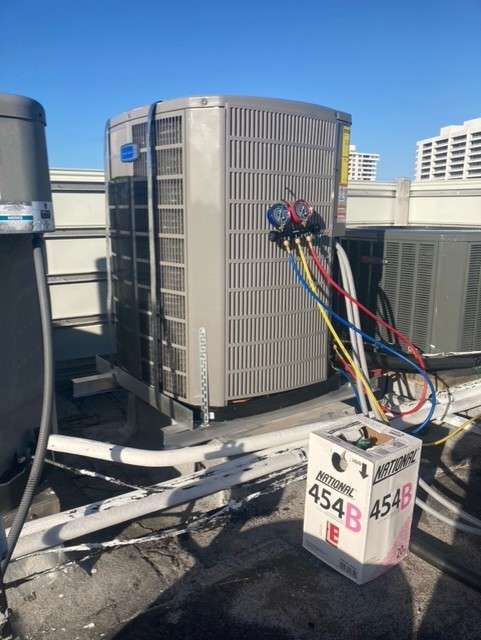
R-32 and R-454B: The Next Generation of Refrigerant
There isn’t a single, hard “ban date” for R-410A. However, it is part of an HFC “phasedown” in the U.S. and other countries. That means the government sets yearly limits on how much new R-410A can be produced or imported. Over time, those limits get stricter. So, you won’t see an overnight ban the way we saw with R-22, but the supply of R-410A will gradually shrink.
Eventually, more AC systems will switch to next-generation refrigerants like R-32 or R-454B. If you own an R-410A system, you can expect it to remain serviceable for quite a while, but the industry is moving toward lower-GWP (Global Warming Potential) refrigerants as the supply of R-410A is phased down.
What Happens If Your AC Uses an Obsolete Refrigerant?
- Check the label: Many older units have a sticker that says “R-22.”
- Rising repair costs: Because R-22 is no longer made, it can be expensive to buy.
- Full Replacement: Many people choose to replace older R-22 systems with modern equipment. It can save money in the long run, especially because new AC units run more efficiently and can reduce power consumption.
Choosing a New System
R-410A is still common and easy to find, but it will eventually be phased down due to climate concerns. Many people now consider lower-GWP refrigerants, like R-32 or R-454B. These new systems often have higher efficiency and better reliability, so you may pay less on energy over time. You can also check if your local utility or government offers rebates for installing a more efficient system.
Tips for Homeowners and Businesses
Ask an HVAC technician to confirm which refrigerant your system uses. If your AC is older than 10–15 years, start planning for a possible replacement. Remember that refrigerant rules keep changing, so your next AC could use the latest refrigerant. Also, check your warranty—some older systems no longer qualify for parts or repairs. If that’s the case, replacing the unit may make the most sense.
The Bottom Line
Rules and technology keep changing. Older refrigerants like R-22 are gone from new systems, and current types like R-410A could face new limits soon. Manufacturers are shifting to lower-impact options. If you have an older AC that leaks or fails, you might face high repair costs. Replacing that system could be more cost-effective. A new AC may offer cost savings through better efficiency and simpler maintenance.
If you have questions about your AC, need a repair, or are exploring replacing an old R-22 unit, give us a call (or email) today!